

Most restaurant owners treat dinnerware as an afterthought. They flip through a supplier catalog, settle on whatever fits the budget, or order the pattern that caught their eye at a trade show. Yet the plate is the first physical contact a guest has with the meal. Before the food arrives, they are already holding it, examining the surface, and forming quiet assumptions about the kitchen’s standards and the restaurant’s overall level. A poor choice costs money in replacements and leaves a subtler but lasting mark on how the place is perceived.
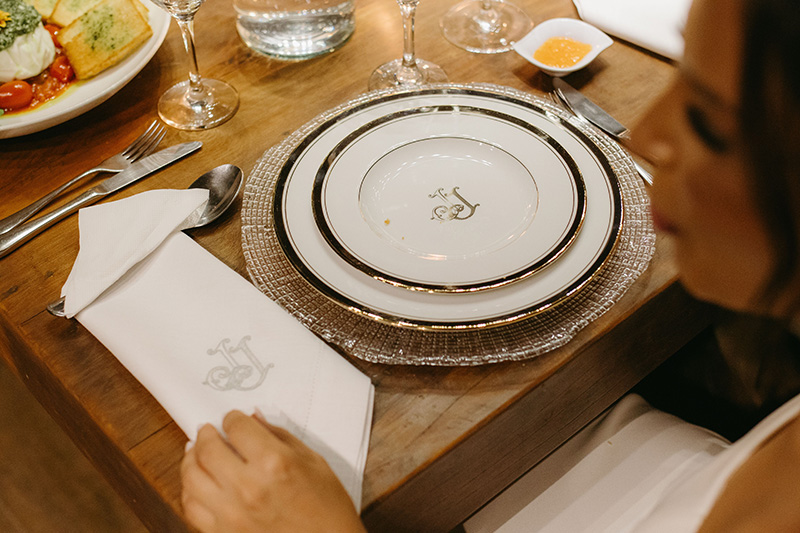
China and glass dominate the professional market. Each material carries distinct strengths and clear limitations. Matching those properties to the realities of a particular kitchen and dining room is what separates a workable decision from an expensive one.
Why China Still Dominates Most Service Formats
China holds its place across the majority of restaurants for practical reasons rather than tradition.
China dinnerware is formed from kaolin, feldspar, and quartz and fired at temperatures between 1,200 and 1,400°C. The resulting dense, vitrified body absorbs almost no moisture, withstands repeated temperature changes, and survives thousands of commercial dishwasher cycles without dulling or staining.
In a busy restaurant this durability is essential. A china plate emerges from the dishwasher free of residual odors or grease and does not take on pigments from tomato sauces or beets. Commercial-grade china is markedly tougher than residential ware; the addition of aluminum oxide or zirconia improves chip resistance by 30 to 40 percent.
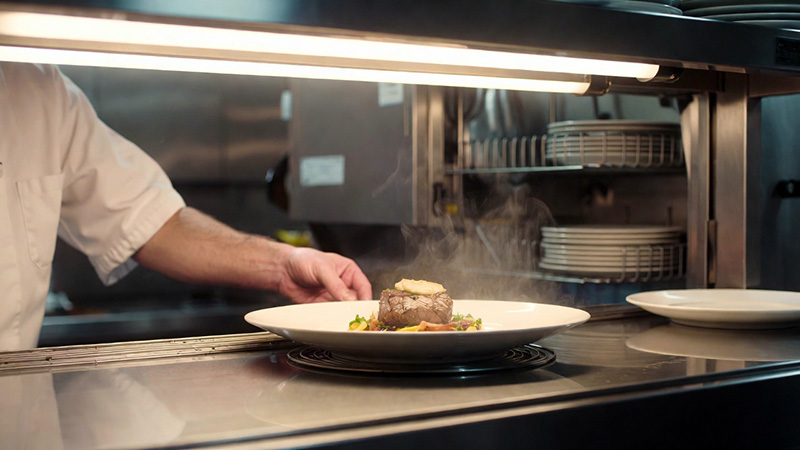
China is strongest when the plate needs to serve as a neutral background. A white matte or gloss surface lets the color, texture, and composition of the food remain the focus. It suits chef-driven restaurants where the visual presentation of the dish is central to the experience, tasting menus that require visual consistency across multiple courses, and higher-priced venues where the table setting itself forms part of the service.
China also retains heat effectively. A properly warmed plate keeps hot food at serving temperature far longer than most alternatives, an advantage on tasting menus or in rooms where the pace of service is not tightly controlled. Pre-warming plates in a convection oven or dedicated warmer is routine in mid-range and fine-dining kitchens.
The Practical Questions Worth Asking
Appearance is only one consideration and rarely the most important. Four operational factors tend to decide the choice:
Compatibility with the production process matters first—what temperatures the dishwasher reaches and whether the ware can safely go into a plate warmer. Turnover rate is next: how many times a plate travels from table to dishwasher and back in a single shift. The material should also align with the restaurant’s price point and concept so that guest expectations match what they see and feel. Finally, restocking availability is frequently overlooked. If a specific model is discontinued six months after opening, maintaining a consistent look often means replacing the entire inventory.
That last point regularly proves the most expensive oversight over the life of a restaurant.
Where Glass Earns Its Place
Glass occupies a narrower role. Its advantage is not general usefulness but the ability to make transparency part of the presentation. Layered desserts, cocktail-style appetizers, cold starters with strong color, tartare, carpaccio, and ceviche all benefit when the guest can see the product from every angle. For concepts built around visual layering and depth, glass dinnerware offers effects china cannot provide.
Borosilicate glass, the professional standard, tolerates sharp temperature swings and can move directly from freezer to table without thermal shock. It also resists scratching from cutlery better than most glazed ceramic surfaces, though it remains more vulnerable to impact damage.
The drawbacks are equally straightforward. Glass holds heat poorly and is therefore unsuitable for hot dishes served over an extended period. Because every fingerprint, drip, or water mark is immediately visible, staff must maintain higher standards of cleanliness before each plate leaves the pass. At high volume that extra check requires deliberate organization.
What the Real Cost Looks Like Over Time
The initial purchase price is a poor guide to long-term expense. Breakage rates, equipment compatibility, and flexibility when the concept evolves matter far more. Industry experience shows that budget restaurants typically replace 30 to 40 percent of their china set each year, mid-range operations replace 15 to 25 percent, and fine-dining venues run between 8 and 15 percent. Tableware that cannot withstand commercial dishwashing at 85°C forces hand washing and can raise labor costs by 15 to 25 percent. Ware chosen for one specific format may become unusable if the menu or style changes later.
For a 40-seat restaurant working with roughly 200 pieces, annual losses usually fall between 16 and 80 units depending on the segment. Reinforced china formulas reduce that number; glass tends to increase it under heavy use.
Making the Decision
The choice between china and glass is driven by operational logic rather than personal preference. China provides the better combination of versatility, heat retention, and durability for most service formats. Glass supplies a distinct visual tool for dishes that benefit from transparency, but it demands stricter cleanliness standards and accepts a higher rate of mechanical loss.
In practice, the strongest approach for most restaurants is to use both. China forms the reliable core of the set for hot dishes and the main menu. Glass is reserved for those specific positions where transparency improves the dish and shapes the guest’s experience. This combination delivers functional reliability where it is needed and visual impact where it is most effective.


Leave a Reply